
Relieving Levator Scapulae Neck and Shoulder Pain in Austin
Understanding the Muscle Behind Your Stiff Neck
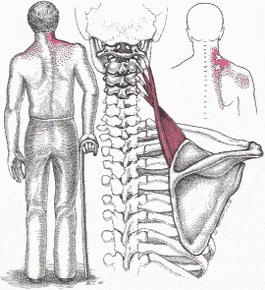
The levator scapulae is a strap-like muscle connecting your upper cervical spine to the top corner of your shoulder blade, and it is the most common cause of acute “wry neck” or waking up unable to turn your head.
When the levator scapulae becomes irritated or overworked, it produces a sharp, nagging ache along the base of your neck that radiates down into the inside border of your shoulder blade. You feel it most when checking your blind spot while driving across Austin, looking down at your laptop, or carrying a heavy shoulder bag.
At Whole Body Health, our goal is to help you relieve acute muscle spasms quickly while identifying the structural and postural habits that keep the muscle in a state of chronic guarding.
Why Does the Levator Scapulae Tighten Up?
Because the levator scapulae elevates your shoulder blade and helps stabilize your neck, it is vulnerable to postural fatigue and emotional tension. Common contributors include:
- Forward Head Posture: Working long hours at a workstation without eye-level monitors forces the muscle to hold the weight of your head against gravity.
- Awkward Sleeping Angles: Sleeping on your stomach or using a pillow that tilts your neck too high locks the muscle in a shortened position overnight.
- Cervical Joint Restrictions: When joints in the middle and upper neck lose proper movement, the levator scapulae contracts to stabilize the area.
- Shoulder Hitching from Stress: Sustained mental stress causes an unconscious upward shrugging of the shoulders, keeping the muscle continuously contracted.
When Home Stretches Aren’t Enough: Whole-Body Care in Austin
If your stiff neck returns every few days, the muscle is likely acting as a symptom of an underlying structural imbalance. At our Westlake clinic, Dr. Ulery and our clinical team evaluate the complete kinetic chain to provide lasting relief:
- Gentle Chiropractic Adjustments: Restoring natural motion to restricted cervical and upper thoracic vertebrae relieves pressure on surrounding nerve pathways.
- Applied Kinesiology: Testing surrounding muscular stabilizers (such as the lower trapezius and deep neck flexors) to ensure your neck is supported without overworking the levator scapulae.
- Cold Laser Therapy (LLLT): Stimulating cellular repair and reducing acute inflammatory swelling around irritated tendon attachments.
- Nervous System Balancing (NET): Releasing physical stress holding patterns that unconsciously elevate your shoulders throughout the day.
Frequently Asked Questions About Levator Scapulae Pain
What causes a stiff neck from the levator scapulae to flare up suddenly?
Sudden levator scapulae pain is often triggered by sleeping with an awkward neck angle, a cold draft on the neck, or a sudden head turn during exercise. However, the flare-up typically builds quietly over time due to sustained desk posture and repetitive shoulder tension.
How often should I perform the levator scapulae stretch?
For active stiffness, performing this gentle stretch 2 to 3 times daily, especially after taking warm showers or finishing long computer sessions, can help maintain neck flexibility. Always keep the stretch within a comfortable range of motion and avoid bouncing.
How does Whole Body Health determine whether my neck pain is muscular or joint-related?
During an in-depth evaluation at our Austin clinic, our providers assess both active cervical range of motion and joint segment mobility, alongside manual muscle testing. This allows us to determine whether a restricted joint is driving the muscle spasm or vice versa, creating a clear, personalized plan for care.
Step-by-Step Home Relief: Self-Massage & Stretching
Step 1: Targeted Trigger Point Release
- Find the tender spot along the top inside corner of your shoulder blade where the neck meets the shoulder.
- Place two fingertips, a tennis ball, or a massage cane directly over the tender node.
- Lean gently against a flat wall or apply steady, comfortable pressure using your hand.
- Hold for 30 to 45 seconds while taking slow, deep diaphragmatic breaths until you feel the knot soften.
Step 2: The Safe Levator Scapulae Stretch Routine
Once you have softened the active trigger point, perform this gentle stretch:
- Sit comfortably upright in a sturdy chair with your feet flat on the floor.
- Reach down with the hand on your painful side and hold the edge of your chair seat to anchor your shoulder down.
- Turn your head 45 degrees away from the painful side (as if looking toward your opposite pocket or armpit).
- Gently tip your chin downward toward your chest until you feel a comfortable stretch along the back and side of your neck.
- Optional: Place your opposite hand gently on the crown of your head to add mild guidance, but do not yank or force the stretch.
- Hold for 20 to 30 seconds, breathe calmly, and slowly return to neutral. Repeat 2 to 3 times on each side.
Relieve Persistent Neck Stiffness Today
You don’t have to push through recurring neck stiffness or turn your whole body just to look over your shoulder. Our Austin team is here to help you address the root cause of your discomfort and restore easy, natural movement.
Book Your Appointment at Our Westlake Clinic +1-512-328-5200