
Upper Trapezius and Shoulder Blade Pain Relief in Austin, Texas
What Causes That Burning Aching in Your Upper Shoulders?
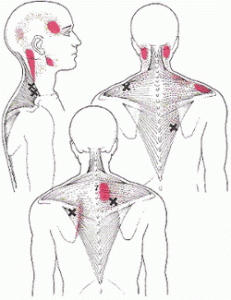
Upper trapezius pain is a muscular strain pattern characterized by a heavy, burning ache along the top ridge of the shoulders, the base of the skull, and between the shoulder blades.
The trapezius is a broad, diamond-shaped muscle covering your upper back and neck. Its upper fibers are responsible for elevating your shoulder girdle and supporting the weight of your arms. When you spend hours hunching over keyboards, gripping a steering wheel during an Austin commute, or carrying mental stress in your upper body, the upper trapezius becomes chronically tight and hyper-sensitive.
At Whole Body Health, we help you break the cycle of burning shoulder tightness by relieving muscular trigger points, restoring joint mechanics, and addressing the daily physical habits that cause them.
Common Triggers for Upper Trapezius Strain
Chronic upper shoulder tightness is rarely an isolated problem. It typically develops from a mix of postural habits and structural compensations:
- Rounded-Shoulder Posture: Slouching shifts your shoulder blades forward and down, placing the upper trapezius under constant, static tension.
- First Rib and Thoracic Restrictions: When the first rib or upper thoracic joints lose normal mobility, the trapezius tightens defensively to protect the base of your neck.
- Weak Postural Stabilizers: Underactive lower trapezius and rhomboid muscles force the upper trapezius to work double-time just to hold your frame upright.
- Stress-Induced Muscular Guarding: The trapezius contains a high density of receptors sensitive to sympathetic nervous system stress, causing it to tighten during periods of anxiety or mental fatigue.
Integrative Shoulder Care at Whole Body Health
While home stretches provide day-to-day comfort, recurring shoulder burn requires evaluating your whole structural frame. At our Westlake clinic, Dr. Ulery and our clinical team provide personalized, root-cause care:
- Spinal & Rib Adjustments: Restoring alignment to the cervicothoracic junction (where the neck meets the upper back) and releasing restricted first ribs to remove mechanical strain on the trapezius.
- Applied Kinesiology Muscle Testing: Identifying weak postural muscles, such as the serratus anterior and middle trapezius, and restoring balanced shoulder blade mechanics.
- Low-Level Laser Therapy (Cold Laser): Calming deep muscular trigger points, easing localized inflammation, and encouraging healthy microcirculation.
- Neuro Emotional Technique (NET): Helping your nervous system downshift out of fight-or-flight guarding so your shoulders can drop naturally away from your ears.
- Support for Radiating Symptoms: If your shoulder discomfort involves neck stiffness or shooting arm sensations, we evaluate for cervical nerve root irritation or disc involvement.
Frequently Asked Questions About Shoulder and Trapezius Pain
Should I use heat or ice for upper trapezius stiffness?
For chronic, aching tension and stiff knots, moist heat (such as a warm shower or heating pad for 15 to 20 minutes) helps relax tight muscle fibers and improve blood flow. If your shoulder pain is the result of an acute strain or sudden injury with sharp inflammation, applying an ice pack for 15 minutes is recommended to calm swelling.
How does upper trapezius tension trigger tension headaches?
The upper trapezius attaches directly to the base of the skull (the occiput). When trigger points form along the top of the muscle, they frequently refer pain upward over the temple, behind the eyes, or wrap around the side of the head in a classic “tension headache” pattern.
How many sessions are typically needed to resolve chronic shoulder tightness?
Because chronic muscular guarding is tied to daily postural demands, recovery timelines vary. Many patients feel noticeable relief within 2 to 4 visits, while retraining muscle memory and restoring full spinal mechanics generally involves a structured care plan alongside targeted home exercises.
first VISIT
Step-by-Step Home Relief: Trigger Point Therapy & Stretches
Step 1: Releasing Trapezius Trigger Points with a Tennis Ball
- Take a firm tennis ball or lacrosse ball and place it against a smooth wall.
- Back up against the wall, positioning the ball directly on the muscular knot between your spine and your shoulder blade.
- Lean your body weight comfortably into the ball to apply steady, moderate pressure.
- Move slightly up, down, or side-to-side to pinpoint tight fibers, holding steady pressure on the knot for 30 to 60 seconds while taking slow, deep breaths.
- Repeat on both sides to release bilateral tension.
Step 2: Gentle Upper Trapezius Side-Neck Stretch
- Sit comfortably tall with good posture, relaxing your shoulders away from your ears.
- Anchor your right hand underneath your right thigh or hold the side of your chair.
- Slowly tilt your left ear toward your left shoulder without turning or rotating your chin.
- Rest your left hand gently over the right side of your head for light guidance, feeling a clean stretch along the top slope of your right shoulder.
- Hold for 20 to 30 seconds, breathe smoothly, release, and repeat on the opposite side.
Find Lasting Relief for Aching Shoulders
You don’t have to carry the weight of tension and chronic shoulder stiffness every day. Our Austin team will help you uncover why your muscles are overworking and give you the personalized support you need to feel comfortable again.
Book Your Appointment at Our Westlake Clinic +1-512-328-5200